Homeowners often assume the city handles anything connected to the street. That assumption works right up until water starts pooling in the yard or the bill spikes without warning. Responsibility for a water line depends on where the break happens, not who owns the pavement above it.
Homeowners usually take care of the water line that goes from the street to their house. The city is in charge of the main line under the street.
This article explains how responsibility works, how to tell where a leak is coming from, how insurance fits into the picture, and what steps to take next if you suspect a problem.
Quick Takeaways
- Homeowners are usually responsible for the water line from the street to the house.
- Cities or utilities maintain the main water line under the street.
- Responsibility often changes at the water meter or curb stop.
- A sudden leak on your property often falls on the homeowner.
- Insurance coverage depends on your policy and endorsements.
- A plumber can confirm responsibility before repairs begin.
What Is a Water Service Line?
A water service line is the pipe that carries water from the public main into your home. It connects the city supply to your plumbing system and feeds every faucet, toilet, and appliance inside the house. While it works quietly most of the time, it plays a central role when something goes wrong.
This line is separate from the city’s water main. That distinction matters when repairs enter the conversation.
What Is the Difference Between the Water Main and the Service Line?
The difference is simple.
- Water main: A large public pipe that runs under the street and supplies water to multiple homes.
- Service line: A smaller pipe that branches off the main and runs to one specific house.
The water main belongs to the city or utility. The service line usually belongs to the homeowner.
Who Is Responsible for the Water Line From the Street to the House?
The answer depends on location, not assumption.
Homeowner Responsibility
Homeowners are usually responsible for:
- The service line running from the meter, curb stop, or property line to the house
- Leaks under yards, driveways, or private walkways
- Water line replacement and repair costs tied to private property
If the pipe feeds only your home, responsibility often follows.
City or Utility Responsibility
Cities or utilities are usually responsible for:
- The public water main under the street
- Leaks before the curb stop or meter, depending on local rules
- Repairs to shared infrastructure
Public pipes serve many homes. Private pipes serve one.
Where Responsibility Usually Changes
Responsibility shifts at specific points. Knowing where helps avoid delays.
At the Water Meter
Many municipalities define responsibility at the meter. Everything downstream toward the house often belongs to the homeowner.
At the Curb Stop or Shutoff Valve
Some cities place responsibility at the curb stop. This valve often sits near the street and marks the handoff point.
At the Property Line
Other municipalities use the property line instead. Anything past that boundary falls on the homeowner.
Local rules vary. A plumber or utility provider can confirm the exact boundary.
How to Tell If a Water Line Leak Is Your Responsibility
Some signs point inward. Others point outward.
Signs the Leak Is Likely the Homeowner’s
- Wet spots or pooling water in the yard
- Higher water bills without increased usage
- Water pressure drops inside the home
- Sound of running water when fixtures are off
These signs often trace back to private water service lines.
Signs the Leak Is Likely the City’s
- Water pooling in the street
- Multiple homes affected
- Damage near public infrastructure
When more than one property feels the impact, the city often steps in.
Common Causes of Water Service Line Failures
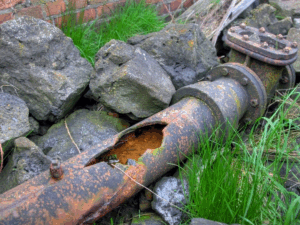 Most failures happen slowly, then all at once.
Aging or Corroded Pipes
Older pipes wear from the inside. Materials break down after decades underground.
Tree Root Intrusion
Roots seek moisture. They press against joints and create cracks over time.
Ground Shifting or Soil Movement
Soil expands, contracts, and settles. Pipes shift with it.
Freezing and Thawing Cycles
Cold climates place stress on buried lines. Repeated freezing weakens joints.
Improper Installation or Materials
Poor installation choices shorten the life of the line from day one.
Does Homeowners Insurance Cover Water Line Repairs?
Coverage depends on the policy.
What Standard Policies Usually Do Not Cover
Most standard policies exclude underground service line damage. That exclusion surprises many homeowners after a leak appears.
Service Line Coverage Endorsements
Some policies offer add-ons that cover water line replacement or repair. These endorsements vary by insurer.
Why Coverage Varies by Policy
Every policy defines coverage differently. Reviewing details before trouble starts prevents confusion later.
What to Do If You Suspect a Water Line Leak
Quick steps reduce damage and confusion.
- Shut off the water supply: Stop the flow to limit further loss.
- Check the water meter for movement: If the meter moves while fixtures are off, a leak likely exists.
- Contact the city or utility provider: They can confirm whether public lines show issues.
- Call a licensed plumber for inspection: A plumber can locate the leak and confirm who is responsible for the water line.
- Document damage for insurance: Photos and notes help support a claim.
Repair vs. Replacement: What to Expect
The right fix depends on the pipe and the damage. Small, isolated breaks may allow a repair.
Older pipes or repeated failures often point to full water line replacement. The repair process may involve excavation or trenchless methods, depending on access and pipe condition.
FAQs
 Is the homeowner always responsible for the water service line?
In most cases, yes, but boundaries vary by municipality.
Does the city ever pay for service line repairs?
Only when the break occurs on public infrastructure.
How can I confirm responsibility before repairs?
A plumber and utility provider can verify the leak location.
Can I be fined for ignoring a water line leak?
Yes, untreated leaks can violate local codes or waste rules.
How long do water service lines last?
Most last 40–70 years depending on material and soil.
Call Buddy’s Plumbing Excellence for Water Line Repair and Replacement
Water line problems create stress fast. Buddy’s Plumbing Excellence helps homeowners in Akron, Ohio, and nearby areas.
They identify problems, stop leaks, and repair or replace water lines with care. You’ve got a Buddy in plumbing.