 A toilet should stay quiet after you flush it. When you hear a high-pitched noise or a long whistling noise instead, something inside the tank is failing. A toilet whistles when water moves through a worn fill valve, a loose gasket, or a partially blocked supply line.
The sound comes from water struggling through a small point of resistance. It creates a vibration that echoes inside the toilet tank.
You hear the noise. You feel the annoyance. You also sense the warning.
A whistling toilet is a sign that a part inside the tank is wearing out. It can also point to water pressure issues or mineral deposits from hard water. If you ignore the sound long enough, you may deal with a bigger problem later, like a stuck valve or a leak.
The good news is that most causes are simple and inexpensive to fix. You can check the problem fast and stop the noise with a basic repair.
This article shows you the most common reasons for a whistling toilet. You will learn how to find the noise, how to fix it, and when to call a plumber in Akron for quick help.
Quick Takeaways
-
A whistling toilet usually comes from a worn fill valve, loose washer, or high water pressure.
-
The sound happens when vibrating water flow escapes through damaged parts.
-
Fastest checks: listen near the supply line, lift the float, inspect the fill valve, check pressure.
-
Most repairs take under 30 minutes with basic tools.
-
If the whistle grows louder or occurs randomly, call a plumber.
The Most Common Reasons Your Toilet Is Whistling
Your toilet whistles because water flow is hitting resistance. The noise is the result of pressure, vibration, or wear and tear. Here are the most common causes plumbers find in Akron homes.
1. Worn or Failing Fill Valve
 The fill valve controls the water level in your toilet tank. When the fill valve wears down, small gaps form inside the valve body. Water pushes through those gaps and creates a whistling sound.
The noise may start as a light hiss. It may grow into a high-pitched whistle when the tank refills.
You can spot a worn fill valve with a simple test. Lift the float arm or float cup while the toilet whistles.
If the noise stops, the fill valve is the issue. A failing valve may also cause slow refills or inconsistent water flow. You may hear a pulsing sound or a long squeal.
Most failing fill valves need replacement. The repair is simple and often takes less than half an hour. If you keep the old valve in place, the noise may get louder. It may also lead to running water or pressure problems.
2. Loose or Damaged Washer Inside the Valve
A tiny rubber washer sits inside the fill valve. It helps control water flow.
When the washer wears down, it cannot form a tight seal. Water squeezes past the damaged washer and makes a whistling noise. This is common in older toilets and in homes with hard water or chlorine exposure.
Signs include uneven flow, high-pitched noise during refill, or a sharp squeal. A loose washer may create a sound that changes pitch as the tank fills.
You can sometimes fix the problem by cleaning the washer. If the rubber is cracked or brittle, it may fail again. Many homeowners replace the whole fill valve when the washer wears out. The cost difference is small, and the repair is more reliable.
3. Partially Blocked Water Supply Line
A water supply line brings water into the tank. Sediment, debris, or mineral deposits can block the line. When this happens, water cannot move through smoothly. It squeezes through a narrow opening and creates a high-pitched whistling or squealing noise.
You may notice slow fill times, a faint whistle at the shutoff valve, or a hissing noise that comes and goes. If the tank takes longer to fill, the supply line may be the cause.
You can flush the supply line to clear debris. The fix is simple. Turn off the water supply. Disconnect the line. Flush the line into a bucket.
Look for sediment in the water. If the blockage returns often, the issue may come from aging pipes or the shutoff valve itself.
4. High Water Pressure in the Home
Water pressure can cause a whistling toilet. When pressure is too high, water forces its way through the fill valve faster than the valve can control it. This creates vibration and noise.
If your home pressure is above 80 PSI, you may hear screeching, whistling, or pulsing sounds during the flush cycle.
You can check your pressure with a simple gauge. Connect it to an outdoor spigot or a laundry sink.
If the number is high, the pressure regulator may need adjustment. High water pressure affects your entire plumbing system. It can cause leaks, noisy pipes, and worn valves.
A plumber can adjust or replace the pressure regulator. This fix protects your toilet, your pipes, and your appliances.
5. Old Ballcock Fill Valve (Metal Style)
Many older toilets use a metal ballcock fill valve. These valves are loud. They whistle, screech, and vibrate during refill.
Metal parts wear down with age. They react to pressure changes and create a sharp whistling sound.
You can spot a ballcock valve by its long metal arm and large float ball. If your toilet has this style, replacement is the best fix. Modern fill valves are quieter, easier to adjust, and more efficient.
6. Mineral Buildup in Older Toilets
Akron has hard water. Hard water leaves mineral deposits inside toilet tanks. Over time, the deposits narrow the openings inside the valve and supply line.
Narrow openings increase pressure. The pressure creates a whistling sound as water flows through.
Look for white or brown scale near the valve opening. Look for rough buildup on the tank walls. If the toilet tank has heavy scale, the whistle may come from wear on several parts at once.
Cleaning can help, but replacement is often smarter when the toilet is old. A new valve and clean supply line stop the noise and improve refill speed.
How to Fix a Whistling Toilet (Step-by-Step)
Here is a simple step-by-step guide you can use to fix a whistling toilet. Each step helps you isolate the noise and find the exact cause.
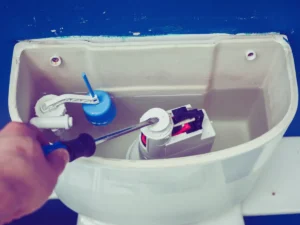 Step 1: Remove the Tank Lid and Listen for the Source
Lift the tank lid and flush the toilet. Listen to the sound. A whistling near the fill valve points to the valve or washer.
A whistling near the supply line points to sediment or pressure. A whistling that echoes through the tank may come from buildup.
Step 2: Check the Fill Valve and Float Operation
Lift the float gently. If the noise stops, the fill valve is failing. If the noise changes pitch, the valve still struggles to control water flow. You can use this test to confirm the issue before replacing the valve.
Step 3: Inspect the Washer and Valve Components
Turn off the water supply. Remove the fill valve cap. Check the washer for cracks, rough edges, or disintegration.
A clean washer may stop the noise for a short time. A damaged washer will keep failing.
Step 4: Flush the Supply Line
Disconnect the supply line and flush it into a bucket. Sediment may come out. You may see mineral deposits or rust. If debris keeps returning, a plumber can inspect the shutoff valve or the supply pipe.
Step 5: Replace the Fill Valve (Most Common Fix)
Turn off the water supply. Remove the old valve. Install the new valve according to its simple setup.
Connect the supply line. Adjust the water level. A new valve stops most whistling problems and improves refill speed.
Step 6: Check Your Water Pressure
Use a water pressure gauge. Normal pressure is 40–60 PSI. Anything above 80 PSI is too high.
High pressure creates noise and wear inside your plumbing system. A plumber can adjust your pressure regulator or install a new one.
When You Shouldn’t Try to Fix a Whistling Toilet Yourself
Some situations point to deeper plumbing problems. If you see any of these signs, call a plumber:
- The shutoff valve won’t turn
- The whistle is extremely loud
- Water pressure exceeds 80 PSI
- You see corrosion on the supply line
- The toilet is 20+ years old
- The whistling continues after replacing the valve
FAQ: Why Is My Toilet Whistling?
Why does my toilet whistle when flushing?
The fill valve or washer may be worn. Water squeezes through a small opening and creates a high pitched whistle.
Why does my toilet whistle when not in use?
Pressure changes or slow leaks can create a whistling noise even when the toilet sits idle.
Is a whistling toilet dangerous?
It can signal high water pressure or wear and tear that may lead to leaks.
Will the whistling stop on its own?
No. The noise comes from a failing part. It will continue until you fix it.
Can hard water cause toilet whistling?
Yes. Mineral deposits create buildup that restricts water flow.
Does a whistling toilet mean high pressure?
Often, yes. High water pressure creates vibration inside the valve and results in a whistling sound.
Should I replace or repair a whistling toilet?
Replace the failing part. If the toilet is older, replacement works better than repeated repairs.
Call Buddy’s Plumbing Excellence — Akron’s Fastest Solution for Whistling Toilets
 If your toilet is whistling, squealing, or making any high-pitched noise, Buddy’s Plumbing Excellence can quickly find and fix the problem.
We serve Akron and all surrounding areas. You call. We come. It’s fixed. Guaranteed.